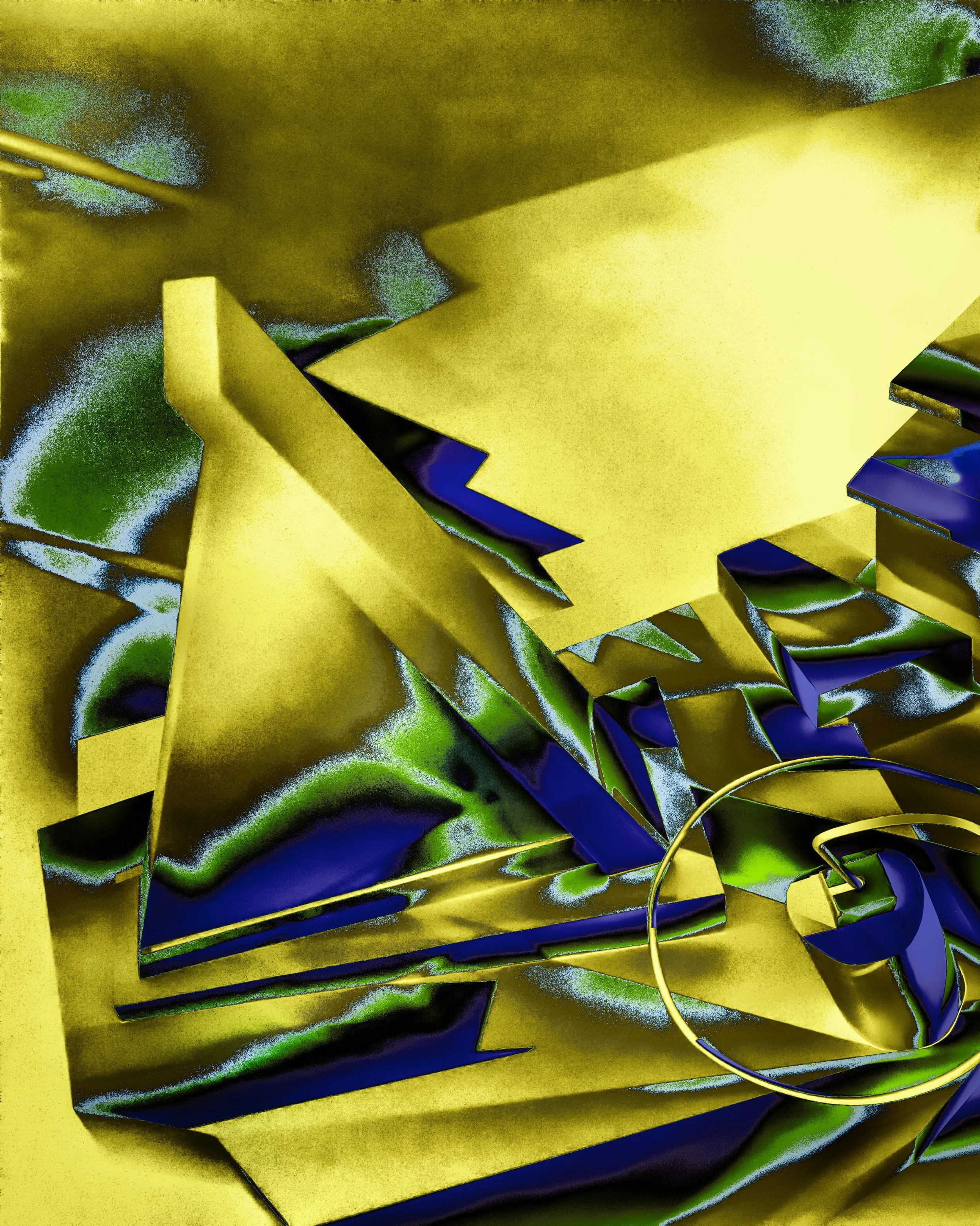
Arabesque: Shadows of Light
Light and shadow rarely remain fixed. As illumination shifts, forms dissolve and reappear, and the familiar logic of vision begins to loosen. In this unstable interval between brightness and obscurity, shadow acquires a presence of its own.
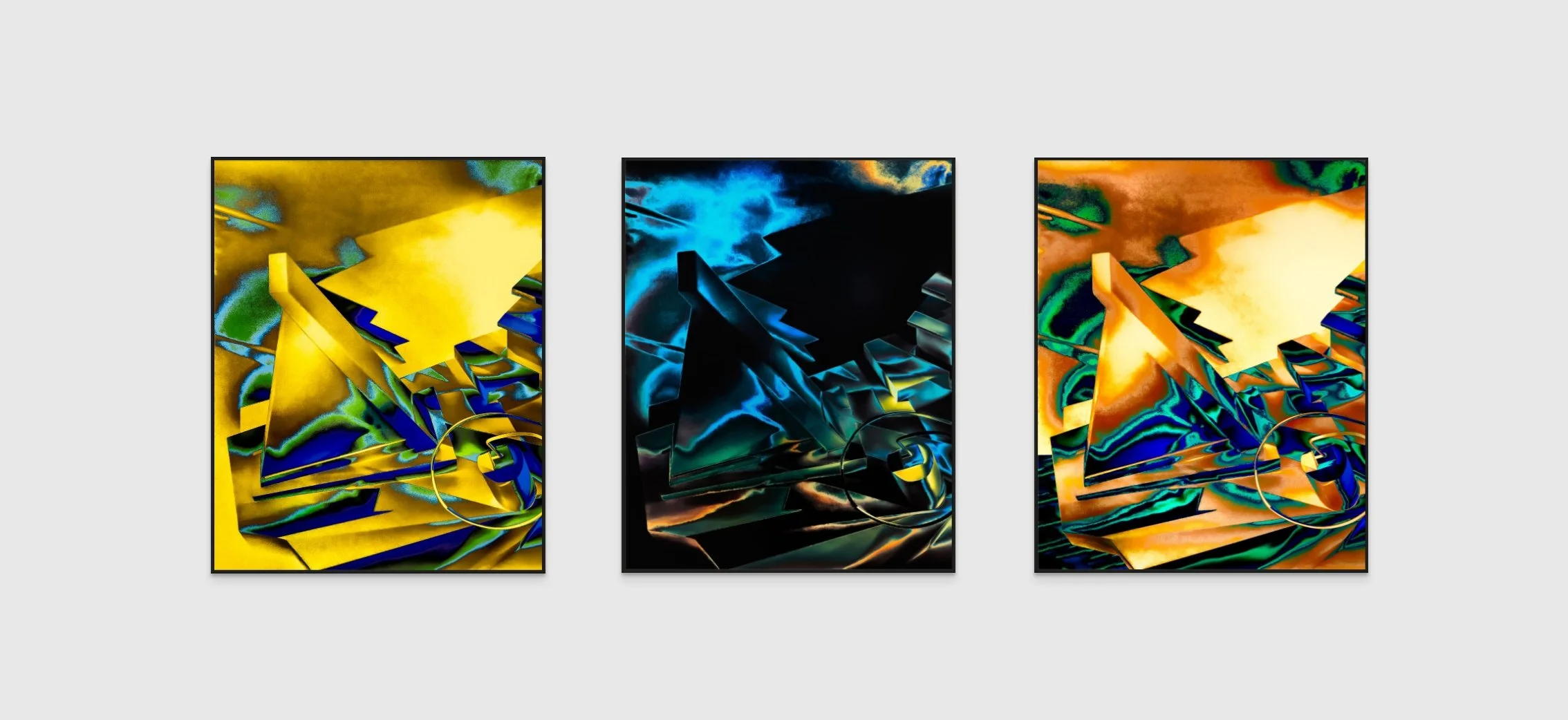
Arabesque: Shadows of Light, I
2020
Archival pigment print
Edition of 15
Arabesque: Shadows of Light, II
2020
Archival pigment print
Edition of 15
Arabesque: Shadows of Light, III
2020
Archival pigment print
Edition of 15
Arabesque: Shadows of Light is a photographic study of a wooden sculptural installation that investigates the transformation of light and shadow. Here, shadow is not treated as a passive absence of light but as an active visual presence—one capable of shifting meaning and form.
The work draws on the Digital Sabattier Effect, a photographic phenomenon in which tonal values reverse so that dark becomes light and light becomes dark. This inversion functions as more than a technical device. It disrupts the expected logic of vision, destabilizing the relationship between illumination and obscurity. At the threshold where these opposites meet, a luminous band often appears, marking the point where perception begins to shift.
Angular structures and sharp contrasts generate a charged visual field. Within these tensions, ornamental echoes suggest the logic of the arabesque—repetition, flow, and rhythmic line—reinterpreted in abstract form.
Through this interplay of inversion and structure, the work reflects on how perception, memory, and emotional response shift when visual certainty is unsettled.
Shadows unfolding in rhythmic patterns of light.
Arcturus Blue
2020
Archival pigment print
Edition of 15
Arcturus Blue
Arcturus Blue originates from a photograph of an abstract multi-form wooden installation with many components, including a curved metal rod, flat and curved surfaces and all are painted white to capture the shadow’s details. Arabesque: Shadows of light series and Arcturus Blue share the same constructed form, but Arabesque is a detailed study of the installation.
Light, in its ability to define form, unveils the sculptural forms in their stark minimalism, illuminating their purity. Yet it is through shadow that these objects gain texture, depth, and, perhaps more profoundly, a sense of mystery. There is a poetic interplay between the light and the shadow, a lyrical rhythm of contrasts and tones within the composition, adding to the drama and complexity of forms.
The sculptural forms and shadows, in the photograph, are no longer simple objects; they become a puzzle, a series of interlocked relationships between what we see and what we do not see.